
Acceptance of What Is: Learning to Swim Through Life's Waves

One of my favourite films is The Best Exotic Marigold Hotel, I've written about it before, believe it or not. Anyway, apart from the wonderful characters, beautiful setting and rather delightful reminder that life doesn't come with an expiry date, there's a piece of wisdom about facing life's difficulties that has stayed with me.
It compares life's challenges to a wave. Resist it, and you risk being dragged under. Swim through it, and you'll eventually come out the other side.
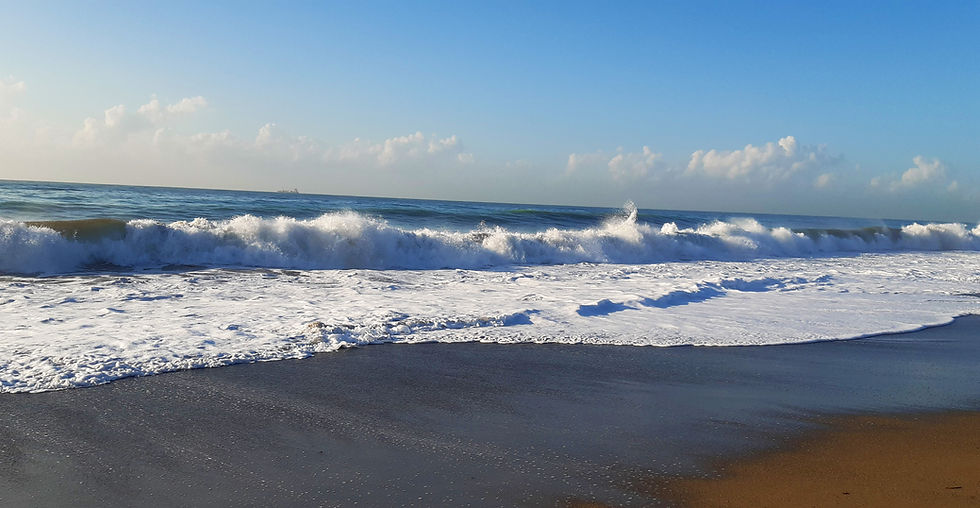
I rather like that.
Although, having spent plenty of time at Australian beaches, I should point out that waves don't always behave quite as cooperatively as we'd like. Sometimes you emerge gracefully on the other side. Other times you come up spluttering, with sand in places sand has absolutely no business being.
Either way, you're still here.
And I think there's something rather wonderful about that.
Acceptance of What Is, Even When We'd Prefer Something Else
I've been thinking about acceptance and how much energy we can spend wishing circumstances were different.
Different people, different outcomes, different decisions. Sometimes an entirely different Tuesday would be appreciated.
We all have expectations about how life should unfold. We make plans, imagine possibilities and generally assume that if we put enough thought and effort into something, things will work out reasonably close to what we had in mind.
Life, meanwhile, appears to be operating from an entirely different set of instructions. And that's where acceptance comes in.
I used to think acceptance sounded a little like giving up. As though acknowledging an unpleasant situation meant throwing my hands in the air and declaring that nothing could be done.
But I've come to see it differently.
Accepting something doesn't mean we have to like it. It doesn't mean excusing poor behaviour, overlooking injustice or pretending that disappointment doesn't hurt.
It means recognising what's actually happening so we can decide what to do next.
Because it's rather difficult to work out where you're going when you're still arguing with where you are.
The Things We Cannot Change (No Matter How Often We Revisit Them)
Our minds are extraordinary things. They can solve complicated problems, imagine entire worlds and remember the lyrics to songs we haven't heard in thirty years.
They can also spend an astonishing amount of time revisiting a conversation from last Thursday.
I know I've done it.
Replaying what was said, considering what was meant, and eventually arriving at the perfect response long after everyone else has moved on with their lives.
Sometimes reflection is useful. We learn from our experiences, recognise our mistakes and discover things about ourselves that we hadn't previously considered.
But there's a point where thinking becomes circling, and we're travelling over the same mental ground without getting anywhere new.
The conversation has happened. The decision has been made. The circumstances have changed.
We can learn from what occurred, apologise where necessary, make amends if possible and choose differently in the future.
What we cannot do is persuade yesterday to have another go.
And believe me, there are a few yesterdays I wouldn't mind sending back for revision.
Learning to Swim With Life
The wave analogy appeals to me because it acknowledges something we occasionally forget. We cannot control everything that happens around us.
People make choices we don't understand. Relationships change. Plans fall apart.
Opportunities arrive at inconvenient times, while others disappear just when we've finally made up our minds.
Even the weather refuses to cooperate, despite our best efforts to organise a lovely weekend.
We can spend an enormous amount of energy resisting these things, insisting they shouldn't be happening, or waiting for circumstances to return to how they once were.
And sometimes, while we're busy doing that, life is continuing around us.
There's a difference between trying to change something we have influence over and fighting against something that has already happened.
One can lead somewhere useful. The other can leave us exhausted.
Learning to swim through life's waves means responding to the circumstances in front of us. Sometimes we need to take action, sometimes we need to ask for help, and sometimes we need to give ourselves a little time before deciding anything at all.
We might even discover that what initially felt like a dreadful change eventually leads us somewhere interesting.
Of course, I wouldn't recommend telling someone who's just experienced a major disappointment that it's probably all for the best. There's a time for wisdom, and there's a time to put the kettle on and listen.
We Don't Need to Have Everything Worked Out
I think one of the more liberating things about getting older is realising that we don't need an answer for absolutely everything.
There are situations I understand better now than I did twenty years ago. There are others I still haven't quite worked out, and a few I've decided are welcome to remain mysteries.
People are complicated. Life is complicated. Even assembling a piece of flat-pack furniture can become complicated when the instructions appear to have been written for someone with three hands and an engineering degree.
We can spend years waiting for explanations, apologies or some satisfying conclusion that makes everything fall neatly into place.
But sometimes the explanation never arrives.
And sometimes we have to decide whether continuing to wait is worth the space it's taking up in our lives.
Acceptance gives us permission to move forward with a few unanswered questions.
We can still care about what happened. We can still feel disappointed or sad. We can even change our minds about how we feel as time passes.
There's no requirement to tie every experience into a neat little bow before enjoying the next chapter.
Choosing Where Our Energy Goes
These days, I find myself increasingly interested in how I spend my energy.
I've spent enough years worrying about things, trying to anticipate problems, helping where I can and occasionally taking responsibility for situations that were never entirely mine to manage.
And while I still care deeply about the people and things that matter to me, I'm learning that caring doesn't require constant involvement.
Sometimes the most useful question is a very ordinary one.
Can I actually do anything about this?
If the answer is yes, then I can consider what action might help.
If the answer is no, I have another decision to make. How much of my day am I prepared to give to something I cannot change?
That doesn't mean feelings disappear on command. Goodness knows, if we could switch off worry with a sensible little question, someone would have invented the button years ago.
But it does help to recognise when our thoughts are going around in circles.
We can care without carrying everything. We can offer help without taking over. We can accept that other people have their own decisions to make, even when we're fairly certain we could organise things much more efficiently.
Well, we think we could.
And Then There Is the Other Side
What I love about the wave analogy is the possibility of coming through something and discovering that life is still waiting for us.
Maybe things haven't worked out the way we imagined. Maybe we've had to let go of an expectation, change direction or accept something we would never have chosen.
There may be sadness in that. There may also be relief, new possibilities and moments of unexpected happiness.
I don't believe every difficult experience happens for a reason, or that we must find a valuable lesson in everything that goes wrong. Some experiences are simply painful, and some take a very long time to come to terms with.
But I do believe we can continue living alongside those experiences, allowing room for other things to grow.
And perhaps that's the real beauty of acceptance.
We stop expecting life to return to some perfectly arranged version of what we thought it should be, and begin paying attention to what is here now.
A conversation. A good book. A lovely afternoon. An unexpected opportunity. A moment of peace after a particularly exhausting week.
Little things that are easily missed when we're too busy wrestling with yesterday.
So, when the next wave arrives, I'll try to remember that wonderful film and its wisdom.
I may still complain about the temperature of the water. I may need a moment to get my bearings. And I certainly can't promise I'll emerge looking particularly dignified.
But I'll keep swimming.
There's still far too much life to enjoy.
Namaste
Deb xx
Thoughtful writing across life, mind, and meaning.
Sometimes acceptance begins with giving ourselves a moment to settle. If life's waves have been a little rough lately, you might enjoy taking a few minutes with one of my gentle mindfulness audios.


Comments