
Philosophy Unveiled - The Timeless Wisdom of Stoicism

Updated: Nov 17, 2025
A Philosophical Walk in the Garden with Epictetus.
Imagine strolling through a lush garden, the air filled with the scent of blooming flowers, the sun casting a warm glow, and the gentle rustling of leaves creating a soothing melody.

As you walk, you notice a figure ahead—an elderly man with a humble demeanour and piercing eyes that seem to hold the secrets of the universe. This is Epictetus, the Stoic philosopher whose teachings continue to resonate with us centuries after his time.
Our walk together in this garden is not just a stroll through nature; it is a journey through the landscape of the mind, a conversation that transcends time and space.
As we walk side by side with Epictetus, we discuss his teachings, exploring how his insights have shaped our way of thinking and how they continue to offer us guidance in our quest for a happy, healthy, and tranquil life.
The Life and Legacy of Epictetus
Before we explore the philosophical discourse, let’s take a moment to understand the man himself.
Epictetus was born around 55 AD in Hierapolis, a city in present-day Turkey. It is understood that he was born a slave, a status that shaped his views on freedom and the nature of the human condition.
Despite his circumstances, Epictetus rose to prominence as a philosopher after gaining his freedom, thanks to his keen intellect and deep insights into the human experience.
His teachings were primarily oral, and it was his student, Arrian, who transcribed his lectures and conversations, giving us works like the Discourses and the Enchiridion (often referred to as the Handbook).
These texts encapsulate the essence of Stoic philosophy—a philosophy that emphasizes the importance of focusing on what we can control, and accepting what we cannot.
Philosophies such as Stoicism are often discussed in TED Talks where influential presentations are given by experts in various fields, designed to spread innovative ideas and inspire audiences around the world.
Stoicism as a philosophy for an ordinary life | Massimo Pigliucci | TEDx Athens
The Garden of Stoicism: Walking with Epictetus
As we walk with Epictetus, he gently reminds us that the first step to a happy and tranquil life is understanding what is within our control and what is not. He famously said,
"Some things are up to us, and some things are not up to us" (Enchiridion, 1.1).
This simple yet profound distinction forms the foundation of his teachings.
In the garden, this principle might be likened to tending to our own plot of land. We can water the plants, pull out the weeds, and ensure that our garden receives enough sunlight. However, we cannot control the weather or the seasons.
Similarly, in life, we can control our thoughts, actions, and reactions, but we cannot control external events, other people's opinions, or the outcome of our efforts.
The Power of Perception: "It's Not What Happens, But How You React"
As we continue our walk, Epictetus points to a blooming rose and says, "It is not the events themselves that disturb people, but their judgments about those events" (Enchiridion, 5).
This simple observation is at the heart of Stoic philosophy. Our perception and interpretation of events have a greater impact on our emotions and well-being than the events themselves.
In the garden, a sudden rainstorm might be seen as a nuisance, ruining the tranquility of the walk. But Epictetus would argue that it is not the rain that disturbs us, but our judgment that the rain is a negative event.
If we shift our perspective and see the rain as a refreshing change, a necessary element for the garden's growth, our experience transforms from annoyance to appreciation.
This Stoic practice of reframing our perspective has been echoed by modern scholars and psychologists alike. Dr. Albert Ellis, a prominent psychologist, was greatly influenced by Stoic philosophy, particularly the teachings of Epictetus.
Ellis founded Rational Emotive Behavior Therapy (REBT), which is based on the idea that our emotional distress is largely caused by our irrational beliefs and interpretations of events.
Ellis often cited Epictetus’ maxim: "Men are disturbed not by things, but by the views which they take of them."
Embracing Adversity: The Art of Amor Fati
As we walk, we come across a sturdy tree, its roots deeply embedded in the soil, weathering every storm that comes its way. Epictetus teaches us to be like this tree, to embrace adversity and see it as an opportunity for growth.
He often spoke of the concept of amor fati, the love of fate, encouraging us to accept whatever happens in life, whether good or bad, with equanimity and grace.
Modern scholars have noted the therapeutic potential of this Stoic acceptance. Dr. Donald Robertson, a cognitive-behavioral psychotherapist, has explored how Stoicism can be integrated into modern psychotherapy.
In his book, How to Think Like a Roman Emperor, he argues that the Stoic practice of accepting and even embracing life's challenges can lead to greater psychological resilience and well-being. Robertson writes,
"Adversity provides us with an opportunity to exhibit virtue. Without obstacles, there would be no challenge, and without challenge, there would be no opportunity to grow."
The Inner Citadel: Finding Peace Within
As our walk continues, Epictetus pauses by a quiet pond, its surface reflecting the sky above. He gestures to it and says,
"If you wish to be in control of your soul, you must observe what disturbs it and why" (Discourses, 2.18).
For Epictetus, true peace and tranquility are found not in external circumstances, but in the inner citadel of our own mind. He teaches us to cultivate an inner calm that remains unshaken by the storms of life.
In today's world, where we are constantly bombarded by news, social media, and the pressures of modern life, the wisdom of Epictetus is more relevant than ever.
His teachings encourage us to turn inward, to find a place of stillness and strength that is immune to the chaos around us.
The Role of Virtue: Living According to Nature
Epictetus believed that living a virtuous life was essential for achieving happiness and tranquility. For the Stoics, virtue is synonymous with living in accordance with nature. This means acting in harmony with our rational nature and fulfilling our potential as human beings.
Epictetus emphasized the four cardinal virtues of Stoicism: wisdom, courage, justice, and temperance. They serve as a guide for our actions and decisions, leading us toward a life of fulfilment and purpose.
As we walk with Epictetus, he explains that virtue is not just about moral goodness but about living in a way that is true to our nature. He says,
"He is free who lives as he wishes to live; who is neither subject to compulsion nor to hindrance nor to force; whose movements are not impeded, whose desires attain their purpose, and who does not fall into that which he would avoid" (Discourses, 4.1).
The Legacy of Epictetus: Influencing Modern Thought
Epictetus’ teachings have had a profound and lasting impact on Western thought. His emphasis on personal responsibility, resilience, and the importance of inner peace has influenced countless philosophers, writers, and thinkers throughout history.
His ideas laid the groundwork for the development of modern psychology, particularly cognitive-behavioural therapy (CBT), which shares many similarities with Stoic philosophy.
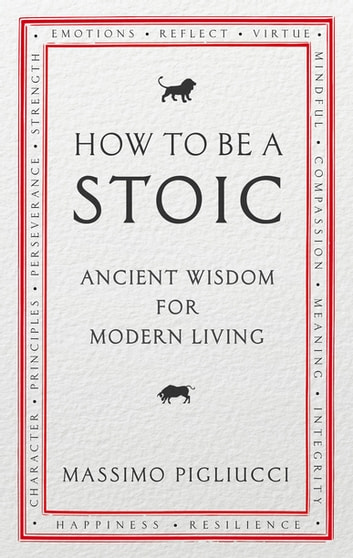
Scholars have acknowledged the enduring relevance of Stoicism in contemporary life. Philosopher and writer Massimo Pigliucci, in his book How to Be a Stoic, explores how Stoic principles can be applied to everyday challenges, offering practical guidance on how to live a good life. Pigliucci writes,
"Stoicism is not about suppressing emotions, but about understanding them, reflecting on them, and learning from them."
My Reflections: The Timeless Wisdom of Epictetus
As I reflect on our philosophical walk in the garden with Epictetus, I am struck by the timelessness of his teachings. In a world that often feels chaotic and overwhelming, his simple yet profound insights offer a beacon of light.
As we leave the garden, the words of Epictetus lingers in my mind, a gentle reminder to focus on what is within my control, to accept what is not, and to live each day with wisdom, courage, and compassion.
Namaste'
Deb xx


Comments